
Related topics: Nutrition and Food Systems, Dairy Industry Transformation, Large Scale Farming, Farm Automation, Food Security
Global agriculture faces unprecedented challenges, from climate change and environmental degradation to economic pressures, social transformation, technological disruption, and evolving policy landscapes. Achieving a balance between productivity, profitability, and planetary health has never been more essential.
Agriculture uses 70% of global freshwater supply, approximately 40% of agricultural land is degraded worldwide, global demand for food is expected to rise 50% by 2050 yet one third of food currently produced is wasted and 700 million people remain food insecure. Africa alone, with a current population of 1.4 billion is projected to reach 2.5 billion by 2050 accounting for 25% of the world’s population.
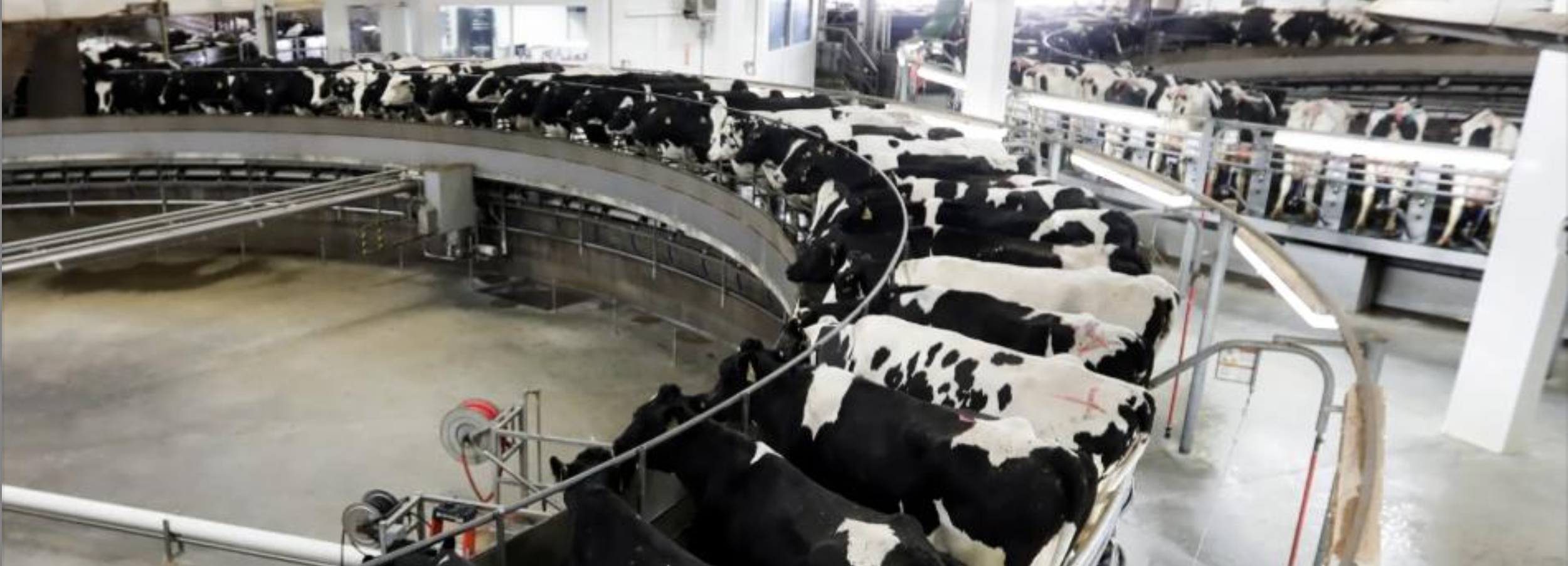
The structure of the global dairy industry is undergoing a fundamental transformation. Across both developed and emerging economies, smallholder dairy farms are steadily giving way to largescale, commercially managed operations designed to maximise efficiency, yield, and consistency of production. Driven by economics and national self- sufficiency goals, largescale livestock farming plays an essential role in the global food system.
Expansion has been enabled by technological advances in feeding systems, automated milking, reproductive management, and animal health monitoring. Digital systems now allow real-time data tracking for herd performance, feed efficiency, and disease control, ensuring that operational decisions are both evidence-based and responsive. The integration of renewable energy systems, water recycling, and nutrient management further supports environmental sustainability within these operations.
However, the shift toward commercial largescale agriculture also presents challenges. Concentration of production increases exposure to systemic risks - such as disease outbreaks, input price volatility, and climate change. Moreover, the transition from family- run farms to corporate-scale enterprises has social implications, including changes in rural employment and community dynamics.
From an investment perspective, largescale dairy systems are becoming increasingly attractive for institutional investors and agribusinesses seeking long-term, asset-backed exposure to food and nutrition markets. Their efficiency, scalability, and capacity to integrate vertically with processing and distribution make them key components of modern food supply systems. In developing economies traditionally reliant on smallholder agriculture it is imperative that largescale agri-investments integrate local communities through not only direct jobs but more importantly, improved supply chains and access to market. The most resilient and responsible large-scale agri-investments should be able to align commercial viability with national nutrition and rural development goals.
The world’s dairy sector stands at the intersection of tradition and technology, driving a new era of data-driven, resilient food systems that balance productivity, profitability, and the planet’s capacity to sustain future generations.